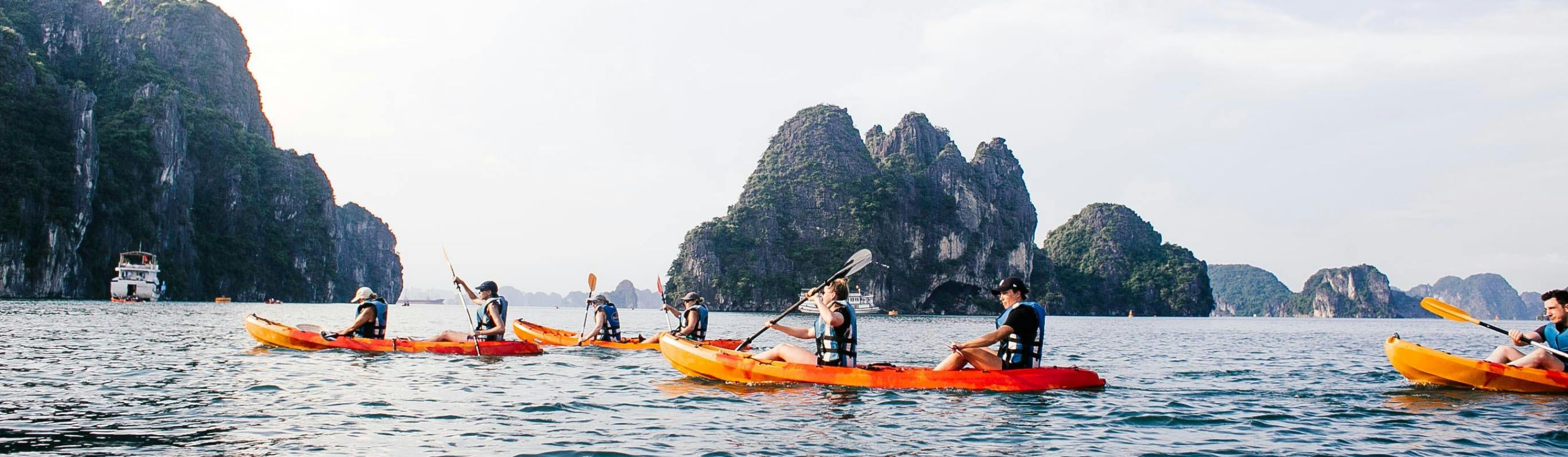
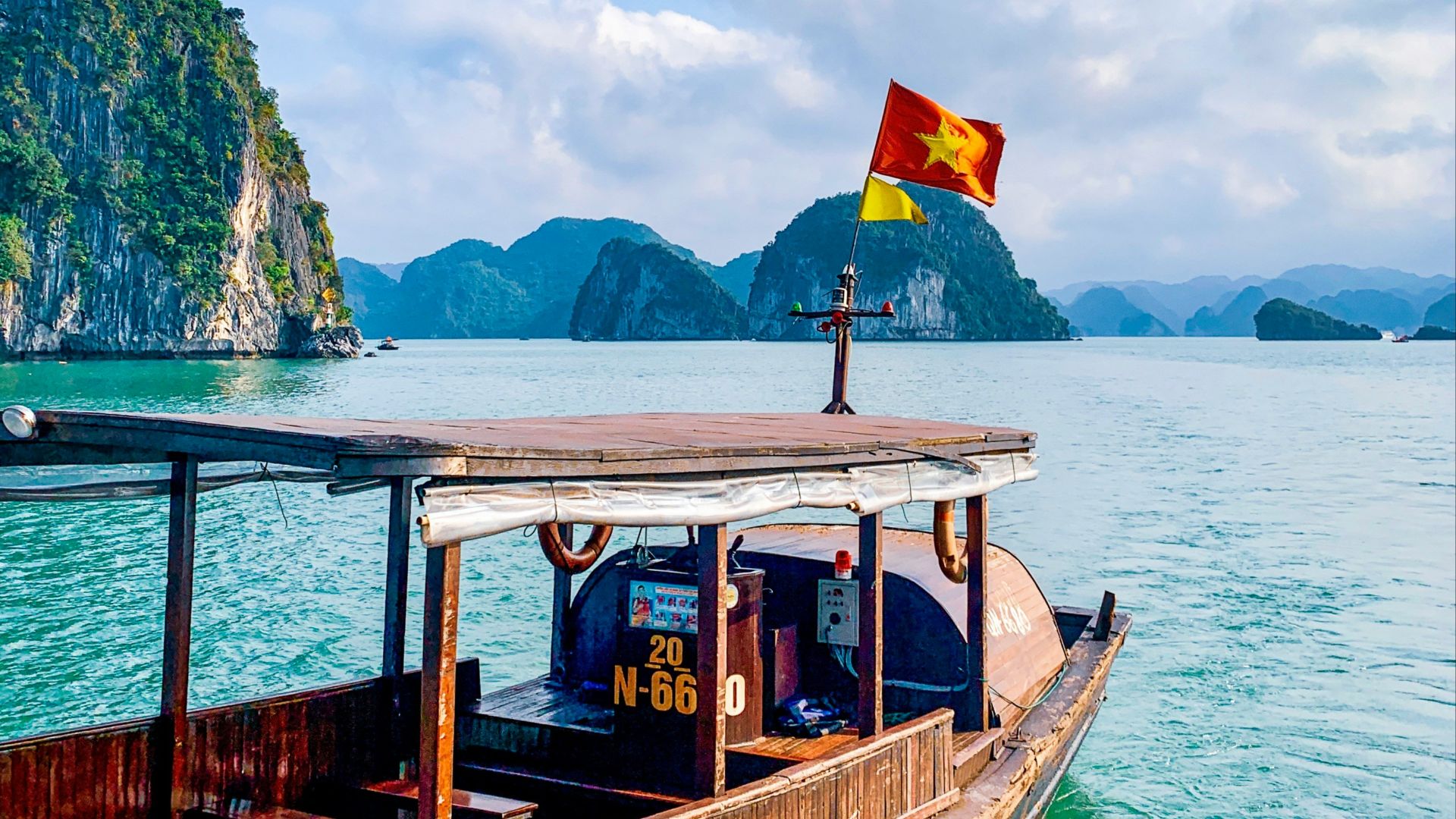
Ha Long Bay is often admired from the deck of a cruise boat, but kayaking reveals the quieter spaces most travelers never reach. Narrow channels slip between limestone cliffs. Hidden lagoons open behind rock walls and the bay unfolds at water level, one paddle stroke at a time. Away from engine noise and main routes, Ha Long Bay feels less like a postcard and more like a living landscape. It is shaped by water, stone, and patience. Exploring by kayak transforms a famous destination into something personal and quietly unforgettable.
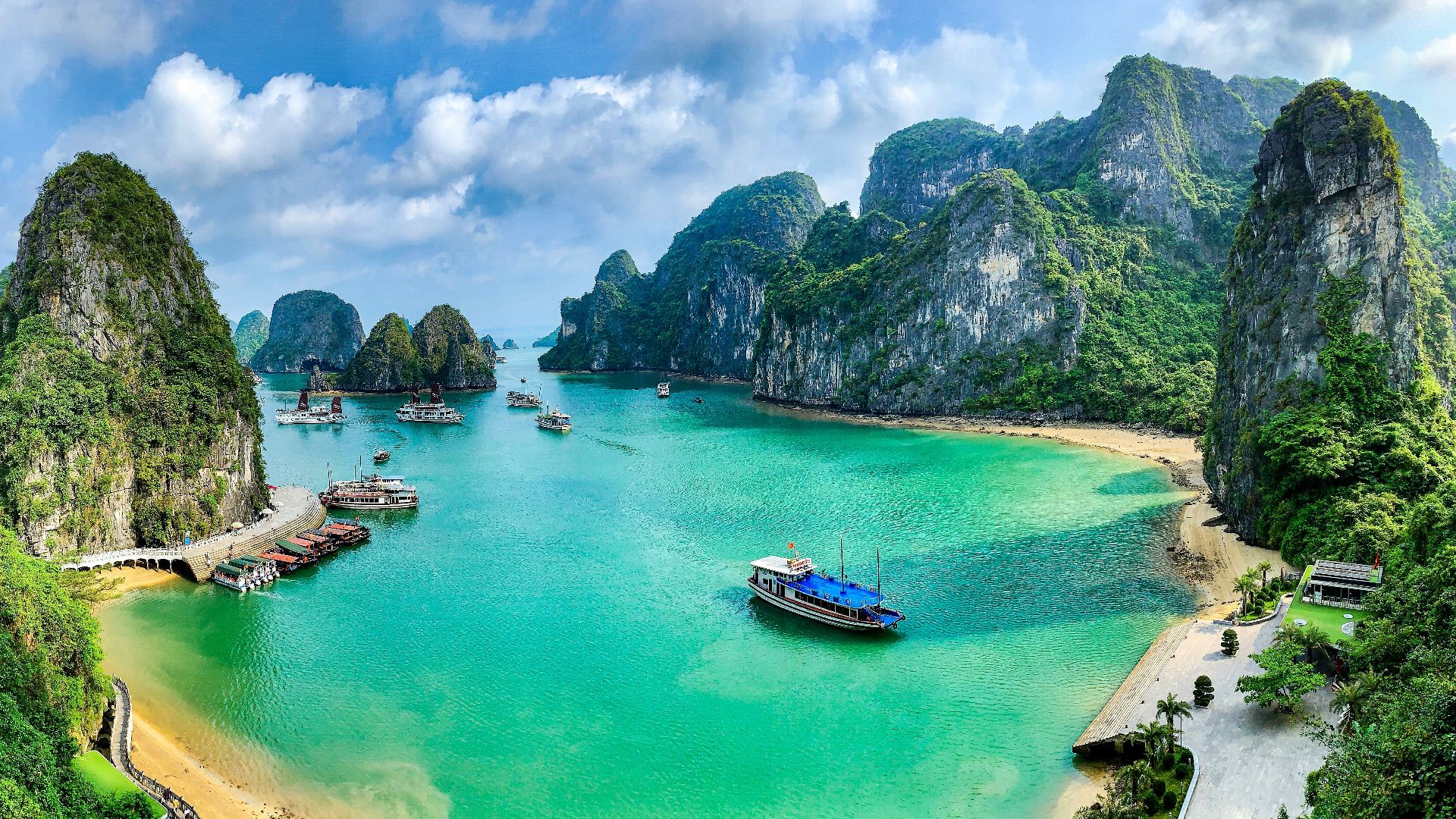
Where Is Ha Long Bay and How Do You Get There?
Ha Long Bay is located in northeastern Vietnam, about 160 kilometers (100 miles) east of Hanoi. Most travelers reach the bay by road, with the journey taking between 2.5 and 3 hours thanks to modern highways. Transfers range from shared shuttle buses to private cars, and many tours include round-trip transport directly from Hanoi. For those seeking a quieter starting point, nearby Lan Ha Bay, often accessed via Cat Ba Island, offers similar scenery with fewer crowds and equally excellent kayaking opportunities.
Why Kayaking Is the Best Way to Experience the Bay
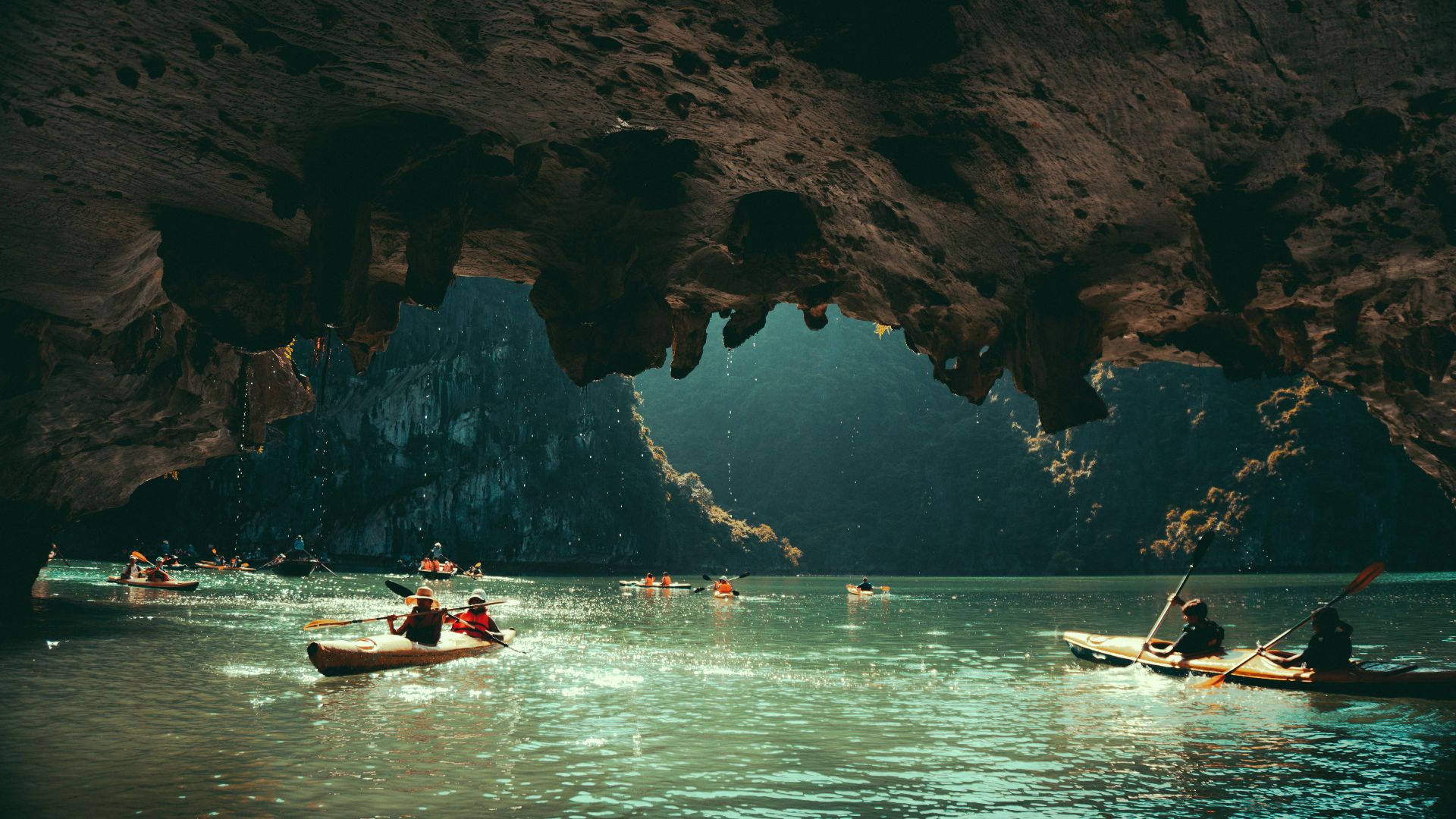
Kayaking allows you to move beyond the main shipping routes and into Ha Long Bay’s hidden corners. Small boats can navigate narrow channels, shallow waters, and low-hanging caves that larger vessels must bypass. The pace is unhurried. You'll have time to notice details: the echo of water against stone, fishermen tending floating villages, and jungle-covered cliffs rising straight from the sea. Whether you’re paddling independently or as part of a guided excursion, kayaking offers a deeper connection to the bay’s natural rhythms.

Caves, Lagoons, and Floating Villages to Explore
Many kayaking routes weave through sea caves that open into enclosed lagoons. Its calm waters are surrounded by sheer limestone walls. Popular areas include Ba Hang, Luon Cave, and the quieter waterways of Lan Ha Bay. Some routes pass floating fishing villages, offering a glimpse into a way of life that has adapted to the water over generations. Wildlife sightings add to the sense of exploration. Keep a lookout for monkeys, seabirds, and fish just beneath the surface.

How Long to Stay and When to Go Kayaking
A single overnight cruise with kayaking included is enough to get a taste of the experience, but two nights allows for more time on the water and access to less-visited areas. The best months for kayaking are from March to May and September to November, when temperatures are comfortable and visibility is good. Summer brings warmer water and dramatic skies, though occasional storms may affect schedules. Winter months can be cooler but often feel peaceful and uncrowded.
Practical Tips for a Safe and Enjoyable Kayaking Trip
Choose a tour operator that prioritizes small group sizes and environmentally responsible practices. Wear quick-drying clothing, sun protection, and secure footwear suitable for wet conditions. Most kayaking routes are beginner-friendly, but basic fitness and comfort on the water are important. Keep valuables in waterproof bags. Listen carefully to safety briefings and respect restricted areas designed to protect fragile ecosystems. Above all, paddle slowly. Ha Long Bay reveals its magic best when you give it time.